How to Make Edible-Friendly Massage Oil: 5 Simple Homemade Recipes
By Body Oil Guide Editorial Team · September 27, 2026 · 12 min read
Most homemade massage oil recipes start with a carrier oil and a few drops of essential oil. That works for many people, but it isn’t the right approach if the oil might end up somewhere it can be swallowed: a child’s hands, a pet’s tongue, a face-and-neck massage near the mouth, or a household where someone simply prefers to use only ingredients that are safe to eat.
This guide covers massage oil made only from food-grade oils sold for cooking, so a small accidental taste isn’t a safety problem. It explains which kitchen oils suit skin best, which common massage-oil ingredients to leave out and why, and gives five simple recipes. For the wider question of what massage oil does and doesn’t do, see our massage oil guide.
Table of Contents
Key Takeaways
“Edible-friendly” means every ingredient is a food-grade oil sold for eating, so a small accidental swallow isn’t a safety concern. It doesn’t make the oil a food, and it isn’t meant to be eaten.
Leave essential oils out entirely. Poison Control warns that some, including wintergreen, camphor and eucalyptus, can cause serious poisoning if swallowed, even in small amounts.
Sunflower seed oil is one of the best-supported kitchen oils for skin: in a study of adult volunteers, it preserved the skin barrier and improved hydration, while olive oil applied the same way weakened the barrier (Danby et al., 2013).
Baby oil and jojoba oil are common massage oils, but neither is a food. Poison Control notes that mineral oil can be breathed into the lungs if a child tries to swallow it.
If you want a scent, infuse the oil with a dried ingredient such as a vanilla bean. Fresh herbs, garlic or fruit in oil can create conditions for botulism.
What “Edible-Friendly” Massage Oil Means, and What It Doesn’t
An edible-friendly massage oil is one where every ingredient is a plain, food-grade oil you could buy in the cooking-oil aisle, with nothing added that becomes a problem if swallowed. The goal is peace of mind about an accidental taste, not a product meant to be eaten. Plant oils in large amounts can still upset the stomach, and an oil that has been on skin, hands and sheets isn’t clean food.
Two practical rules follow from that. First, buy oils sold as food, not “cosmetic grade” oils, since only a food product is made and labeled for eating. Second, keep the recipe to oils plus, at most, a dried food-grade flavoring. The moment you add a concentrated extract, a fragrance or an essential oil, it’s no longer edible-friendly.
The Best Food-Grade Oils for Homemade Massage Oil
What matters most for a homemade massage oil is glide, how quickly the oil absorbs, and how gentle it is on the skin barrier. Here’s how the common kitchen oils compare.
Food-grade oil
Feel on skin
Why use it
Watch out for
Sunflower seed oil
Medium, good glide
Barrier-friendly in a human study (Danby et al., 2013); cheap and easy to find
Oxidizes faster than coconut oil; buy small bottles
Grapeseed oil
Light, fast-absorbing
Thin and non-greasy; mixes well with richer oils
High in polyunsaturated fat, so it goes rancid sooner
Virgin coconut oil
Rich, melts on warm skin
Solid in a jar, so less mess; studied for dry skin
Solid below about 76°F; rated among the more pore-clogging oils
MCT oil (food-grade)
Very light, no scent
Stays liquid, very slow to oxidize
Swallowing more than a little can upset the stomach
Sweet almond oil
Rich, long glide
A classic massage oil with a long track record
Tree nut: skip it if anyone involved has a nut allergy
Olive oil
Heavy, slower to absorb
Easy to find in any kitchen
Weakened the skin barrier in the same human study; better as a small part of a blend
The sunflower and olive oil comparison comes from Danby and colleagues (Pediatric Dermatology, 2013), who applied the oils to the forearms of 19 adult volunteers twice a day for four weeks. Sunflower seed oil preserved the outer skin barrier and improved hydration. Olive oil reduced barrier integrity and caused mild redness. It’s a small study, but it’s direct human evidence, and it’s why the recipes below lean on sunflower oil rather than olive oil. Our complete guide to body oil covers this study and the fatty-acid reasoning behind it in more detail.
One label detail: many supermarket sunflower oils are now “high-oleic,” bred to be more heat-stable for cooking. They keep longer on the shelf but contain much less linoleic acid, the fatty acid thought to explain sunflower oil’s barrier benefit. If the label says “high-linoleic” or doesn’t say “high-oleic,” it’s closer to what the study used.
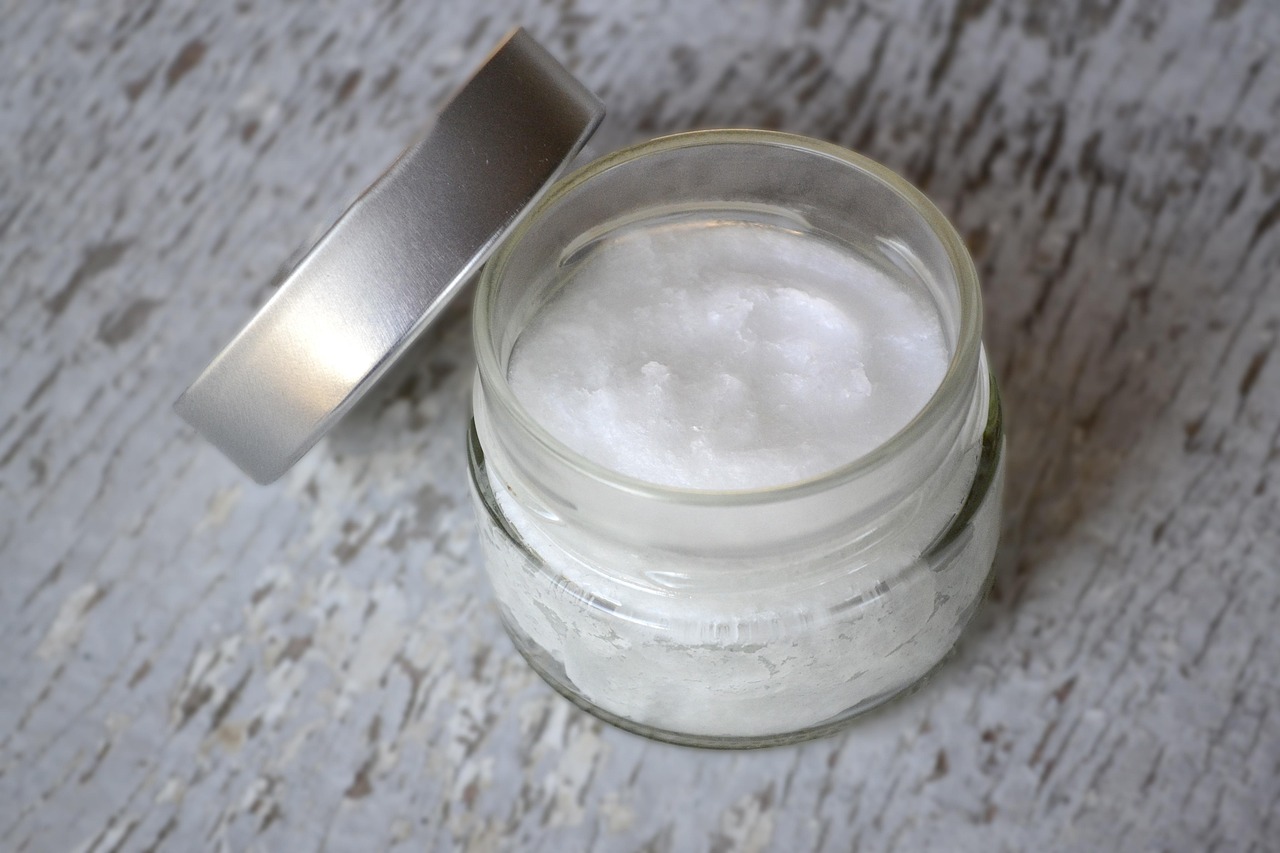
Photo via Pixabay, creator DanielaElenaTentis (Pixabay Content License).
Ingredients to Leave Out
Essential oils. They’re highly concentrated, and several are dangerous if swallowed. Poison Control describes swallowing wintergreen oil as roughly equivalent to swallowing a large number of adult aspirin tablets, and warns that camphor and eucalyptus oil can cause seizures. Children are at higher risk. If you don’t need an edible-friendly oil, our carrier oil guide covers safe essential oil dilution for ordinary massage oil.
Baby oil and mineral oil. These aren’t food oils. Poison Control notes that swallowing baby oil is usually only mildly toxic but that it can easily be breathed into the lungs, causing aspiration pneumonia.
Jojoba oil. A popular massage and skin oil, but it’s a liquid wax sold for topical use, not a food oil.
Fresh herbs, garlic, citrus peel or fruit. Fresh plant material in oil creates a low-oxygen, moist environment where the bacteria that cause botulism can grow at room temperature. Extension food-safety guidance limits refrigerated fresh-herb oils to a few days, which makes them impractical for massage. Use dried ingredients instead.
Flavor extracts, honey and syrups. Alcohol-based extracts and sugary ingredients don’t mix with oil. They separate, turn sticky, and add nothing useful for skin.
5 Simple Homemade Massage Oil Recipes
Each homemade massage oil recipe makes about half a cup (120 ml), enough for several full-body massages. Small batches mean the oil is used before it starts to oxidize. Use a clean, completely dry bottle or jar, since water in the container shortens shelf life.
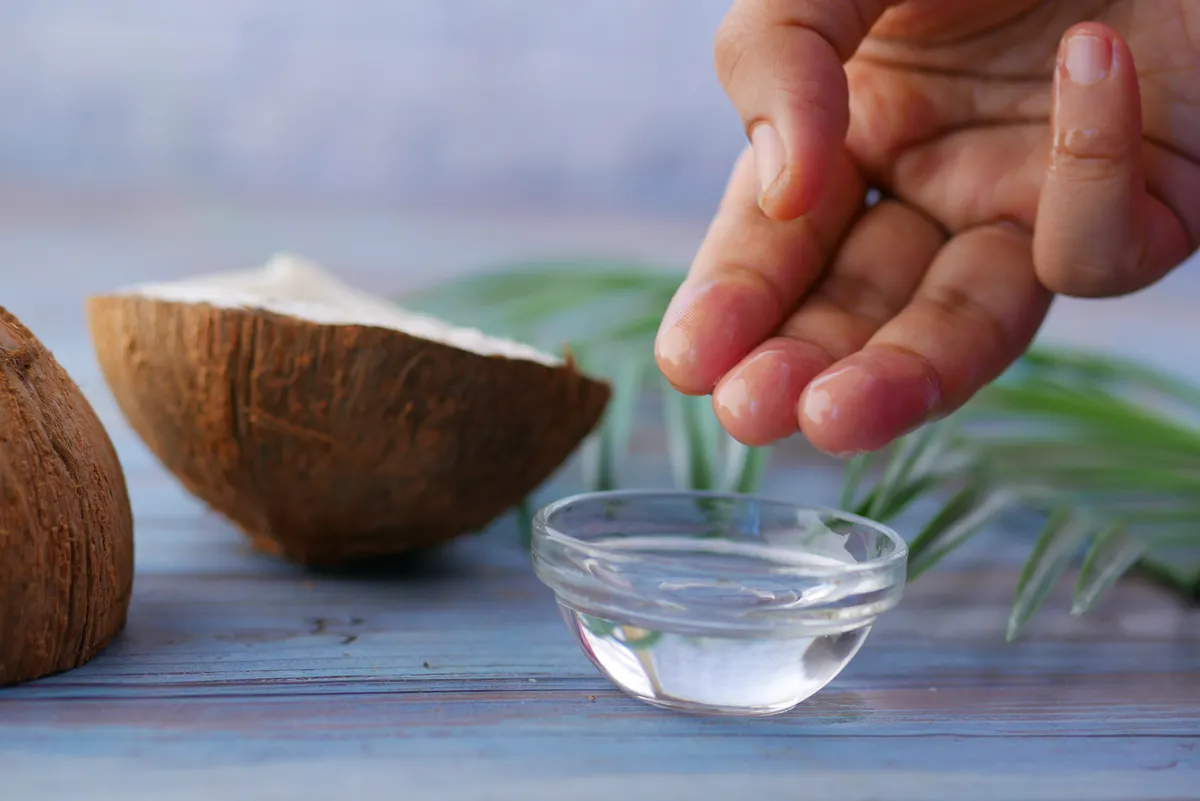
Photo via Pexels, creator Towfiqu barbhuiya (Pexels License).
1. Everyday Sunflower Massage Oil
6 tablespoons sunflower seed oil
2 tablespoons grapeseed oil
Pour both oils into a bottle, cap it and shake. The sunflower oil gives the glide and the barrier-friendly base, and the grapeseed oil makes the blend lighter and quicker to absorb. This is the best all-round homemade massage oil, a starting point that works for most skin types.
2. Coconut Melt Massage Oil
4 tablespoons virgin coconut oil
4 tablespoons sunflower seed oil
Gently melt the coconut oil in a bowl set in warm water, stir in the sunflower oil, and pour into a wide jar. The mix sets soft in a cool room and melts as soon as you scoop it into warm hands. It’s the richest recipe here and a good pick for dry skin. Coconut oil is rated among the more pore-clogging oils, so skip it on an acne-prone back or chest. Our coconut oil for massage guide explains that tradeoff.
3. Light, Unscented Massage Oil
4 tablespoons food-grade MCT oil
4 tablespoons grapeseed oil
Shake together in a bottle. This is the thinnest, least greasy option, with almost no scent, and the MCT oil helps the blend last longer on the shelf. Use it for quick massages when you don’t want oil left on the skin. Buy MCT oil sold as a food, and keep in mind that swallowing more than a small amount can cause stomach upset.
4. Vanilla Bean–Infused Massage Oil
8 tablespoons sunflower seed oil (or the Everyday blend above)
1 dried vanilla bean, split lengthwise
Warm the oil and the split bean together gently, in a bowl over warm water, to about 140°F (60°C) for 5 minutes, the temperature Penn State Extension suggests for speeding up an infusion. Let it cool, pour it into a jar with the bean, and leave it to steep for one to two weeks, shaking now and then. Strain out the bean, or leave it in for a stronger scent. Store it in the refrigerator and use within three months, in line with extension guidance for oils infused with dried ingredients.
Use the same warm-infuse, cool and steep method as the vanilla recipe, then strain through a fine sieve or coffee filter so no plant bits are left in the oil. The result has a soft, hay-like scent. Chamomile is in the same plant family as ragweed, so anyone with a ragweed or daisy-family allergy should skip this one. Refrigerate and use within three months.
How to Make and Store Homemade Massage Oil Safely
Start clean and dry. Wash the bottle and let it dry completely. Even a few drops of water in oil shorten its life.
Label and date it. Write the oils used and the date made on the bottle, especially if anyone in the house has allergies.
Keep plain blends cool and dark. Recipes 1 to 3 keep at room temperature, away from light and heat. The sunflower and grapeseed blends are best used within a few months. The MCT blend keeps longer.
Refrigerate infused oils. Recipes 4 and 5 go in the fridge and should be used within three months. Warm a small amount in your hands before use.
Trust your nose. A sharp, bitter or crayon-like smell means the oil has oxidized. Throw it out, since rancid oil can irritate skin. Our best body oil guide explains how and why plant oils go rancid.
Pour, don’t dip. Pour what you need into your hand or a small dish, rather than dipping oily fingers into the jar, so the rest of the batch stays clean.
Patch Test Before a Full Massage
“Food-grade” and “natural” don’t mean no one can react. Before using any homemade massage oil blend over a large area, rub a small amount on the inner forearm and check it over the next 24 to 48 hours for redness, itching or bumps. This matters most for anyone with eczema, sensitive skin or known food allergies. Our carrier oil guide walks through a step-by-step patch test.
Frequently Asked Questions
Is homemade massage oil safe if swallowed?
If it’s made only from food-grade cooking oils, like the recipes above, a small accidental taste isn’t a safety concern. That changes if it contains essential oils, baby oil or other non-food ingredients. If someone swallows a product containing essential oils, contact Poison Control at 1-800-222-1222 in the US.
Can I add essential oils to these recipes?
You can, but the oil is no longer edible-friendly once you do, and it should be kept away from children and pets. If you add essential oils, follow the dilution rates in our carrier oil guide.
Can I just use olive oil from the kitchen?
For an occasional massage, yes. But in a human study, olive oil applied twice a day for four weeks weakened the skin barrier, while sunflower seed oil didn’t. For regular use, or for anyone with dry or eczema-prone skin, sunflower oil is the better-supported choice.
How long does homemade massage oil last?
Plain oil blends usually keep for a few months if stored cool and dark. Oils with more polyunsaturated fat, like grapeseed, go rancid sooner than MCT or coconut oil. Infused oils made with dried ingredients should be refrigerated and used within three months. In every case, a rancid smell means it’s time to throw it out.
The Bottom Line on Edible-Friendly Homemade Massage Oil
An edible-friendly, safe homemade massage oil is simple to make: one or two food-grade oils from the kitchen, a clean dry bottle, and nothing that becomes dangerous if swallowed. Sunflower seed oil is the best-supported base, grapeseed and MCT oil make a blend lighter, and virgin coconut oil makes it richer. Leave out essential oils, baby oil, jojoba and fresh plant material.
Make small batches, label them, patch-test before a full massage, and throw out any oil that smells off. That covers nearly everything that can go wrong with a homemade massage oil.
About the Author
Written and researched by the BodyOilGuide.com editorial team. Read our editorial standards for how we research, source, and fact-check skin-care content.
Sources
Danby, S.G., AlEnezi, T., Sultan, A., Lavender, T., Chittock, J., Brown, K., & Cork, M.J. “Effect of Olive and Sunflower Seed Oil on the Adult Skin Barrier: Implications for Neonatal Skin Care.” Pediatric Dermatology, 30(1), pp. 42-50, 2013. pubmed.ncbi.nlm.nih.gov/22995032
Penn State Extension. “How to Safely Make Infused Oils.” Guidance on botulism risk with fresh herbs in oil, dried-herb infusions, heating to 140°F, and refrigerated storage for up to three months. extension.psu.edu/how-to-safely-make-infused-oils
General food-science references on the fatty-acid composition and oxidative stability of sunflower (including high-oleic varieties), grapeseed, coconut and MCT oils, and on coconut oil’s melting point (about 24°C/76°F).