5 Best Coconut Massage Oil Picks, by How You’ll Use It
By Body Oil Guide Editorial Team · September 27, 2026 · 14 min read
Most “best coconut massage oil” lists mix three different things together: plain fractionated coconut oil, a jar of virgin coconut oil from the kitchen aisle, and scented blends where coconut is one ingredient among many. They behave differently on skin, on sheets, and in the bottle, so ranking them against each other on scent or packaging doesn’t tell you much.
This guide sorts coconut massage oil by what you’ll actually use it for — home massage, professional table work, blending with essential oils, or the melt-on feel of whole coconut oil — and picks one plain, single-ingredient product for each. The evidence for coconut oil on skin, and its real tradeoff for acne-prone backs and chests, is covered in our guide to coconut oil for massage. This article picks up from there to answer a narrower question: which bottle to buy.
Table of Contents
Key Takeaways
For most massage, fractionated coconut oil is the more practical form: it stays liquid at room temperature, has no coconut scent, and doesn’t need warming first. Whole virgin coconut oil is solid below about 76°F (24°C) and melts on warm skin.
On a label, fractionated coconut oil usually appears as “Caprylic/Capric Triglyceride.” Whole coconut oil appears as “Cocos Nucifera (Coconut) Oil.” Both can be sold as “100% coconut oil.”
The strongest clinical evidence for coconut oil on skin is for virgin coconut oil: a 117-child randomized trial found it improved eczema severity and skin water loss more than mineral oil over 8 weeks (Evangelista et al., 2014). No comparable trial tests fractionated coconut oil for massage.
Whole coconut oil is widely rated among the more pore-clogging common oils, which matters most on the back and chest, two areas every full-body massage covers.
An unscented, single-ingredient bottle is the safest default. Added fragrance is one of the more common causes of skin irritation from massage products, and you can always add a diluted essential oil yourself.
What Makes a Good Coconut Massage Oil
Four things decide what makes the best coconut massage oil, and none of them is the brand name on the front.
Form. Fractionated or whole is the biggest choice, because it changes the texture, the scent, and how the oil behaves at room temperature. The next section covers it in full.
A one-line ingredient list. A plain coconut massage oil should list one ingredient. Products sold as “coconut massage oil” sometimes blend coconut with mineral oil, other plant oils, or fragrance, which makes them different products with a coconut name. None of that is harmful in itself, but you’re no longer comparing coconut oil with coconut oil.
No added fragrance. Fragrance and essential oils are a well-documented source of contact irritation, and a massage covers far more skin than a face cream does. Starting unscented lets you add a properly diluted essential oil if you want one, instead of accepting whatever blend and strength the manufacturer chose.
A practical bottle. For massage you need to pour with oily hands. A pump or flip-top bottle is easier than a jar, and a larger size costs less per ounce if you massage often. A jar only makes sense for solid, whole coconut oil that you scoop.
Fractionated vs. Whole Coconut Oil: Which Form to Buy
Whole coconut oil, virgin or refined, is solid at typical room temperature and melts at around 76°F (24°C), below body temperature. Fractionated coconut oil has the longer-chain fatty acids removed, which leaves mostly the medium-chain caprylic and capric acids. The result stays liquid even in a cool room, has no coconut smell, and feels lighter on skin.
Fractionated coconut oil
Whole (virgin) coconut oil
At room temperature
Liquid
Solid to semi-solid below about 76°F
Scent
None
Coconut scent (virgin); little or none (refined)
Feel on skin
Light, fast to spread
Richer, melts as it warms
Label name
Caprylic/Capric Triglyceride
Cocos Nucifera (Coconut) Oil
Strongest evidence
No clinical trial for massage located
Eczema barrier-repair trial vs. mineral oil (Evangelista et al., 2014)
Best for
Regular massage, professional use, essential oil blends
Occasional home massage, dry skin, the melt-on feel
In practice, most people shopping for the best coconut massage oil will be happier with a fractionated oil. It’s ready to pour, it doesn’t turn solid in a cold room halfway through a session, and it doesn’t leave a food-like coconut smell. Whole virgin coconut oil is the better pick if your main goal is dry skin, since that’s the form the clinical trials tested, or if you enjoy the way it melts on contact.
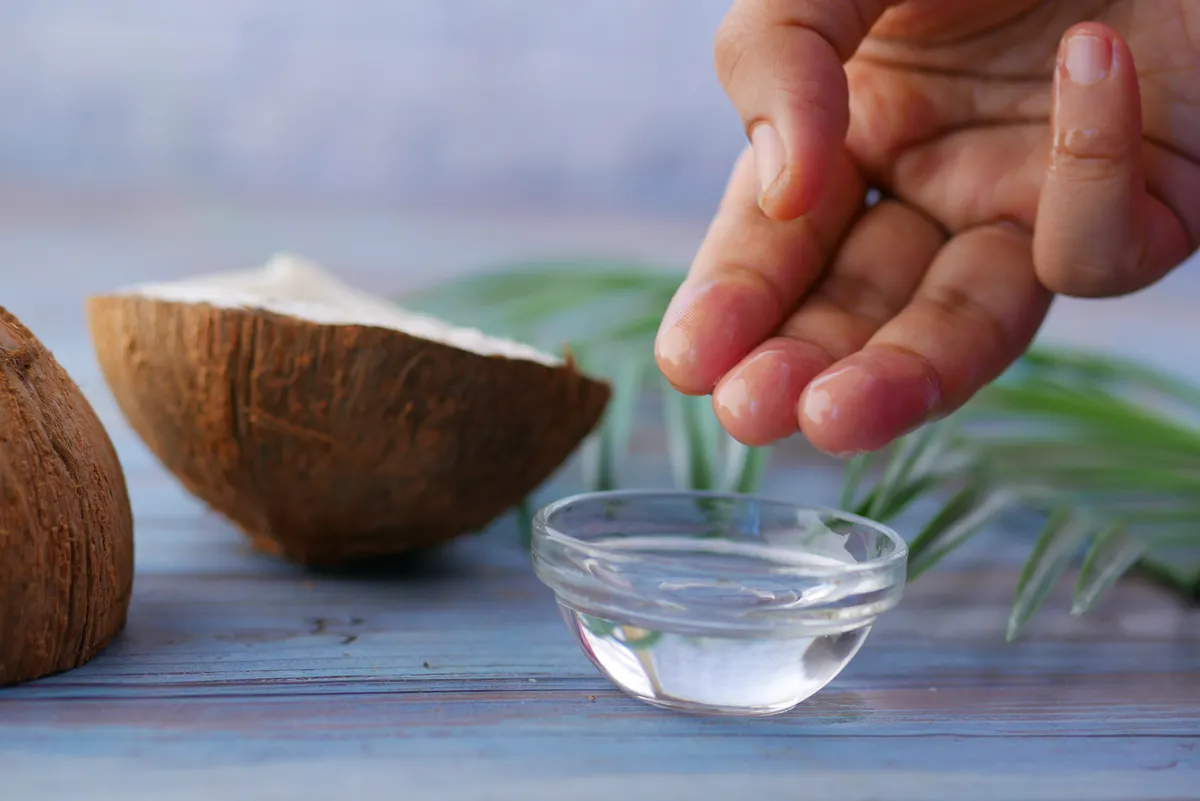
Photo via Pexels, creator Towfiqu barbhuiya (Pexels License).
The Best Coconut Massage Oils to Buy
A short, cross-brand list of the best coconut massage oil picks, one for each common use. Every product below is US-available and single-ingredient, and names, ingredients and sizes were checked against the brand’s own product page or a major retailer listing at the time of writing. Prices are described in relative terms, since exact current pricing changes often — check the retailer for today’s price. We have not run hands-on trials of these products; each pick is based on its ingredient list, form, and fit for the use described.
Best Overall for Home Massage: NOW Solutions Liquid Coconut Oil, Pure Fractionated
A single-ingredient fractionated coconut oil, described by the brand as colorless, odorless, and light, and marketed for dry skin, as a carrier for essential oils, and for massage. It’s sold in 4 fl oz and 16 fl oz bottles at drugstores, health-food stores and online retailers, and it’s usually one of the less expensive options per ounce. The 16 oz bottle is the sensible size if you massage more than once a week. It’s the same product we list for oily and combination skin in our best body oil picks.
Best for Massage Therapists: Bon Vital’ Coconut Massage Oil
Made specifically for massage therapy rather than general skin care. The ingredient list is one line, “100% Pure & Natural Caprylic/Capric Triglyceride (Fractionated Coconut Oil)”, and it’s completely unscented. The brand describes it as having a rich consistency with long glide, and it’s sold through massage-supply retailers in sizes up to a 1-gallon bottle, which makes it a strong best coconut massage oil pick for a busy practice. Bon Vital’ also sells coconut massage lotion, creme and gel versions, so make sure the label says “Massage Oil” if you want the plain oil.
Best Certified Organic: Aura Cacia Organic Fractionated Coconut Oil
Single ingredient, “Organic Caprylic/Capric Triglyceride (Fraction of Coconut) Oil”, certified organic by Quality Assurance International (QAI). It’s sold in a 4 fl oz bottle, which makes it a better fit for personal use or for mixing small batches of massage blend than for daily full-body sessions. Aura Cacia also sells a non-organic fractionated coconut oil and a range of essential oils pre-diluted in fractionated coconut oil. Those pre-diluted bottles are scented products, so check the front label if you want the plain oil.
Best for Blending With Essential Oils: Plant Therapy Fractionated Coconut Carrier Oil
Plant Therapy sells its fractionated coconut oil as a carrier oil, meaning a base for diluting essential oils, and lists it as lightweight, non-greasy and odorless. It comes in a 4 oz bottle, with larger bulk sizes sold separately and an organic version at a higher price. If you plan to make your own scented massage oil, a neutral, odorless base like this one is the right starting point. Our guide to choosing a carrier oil covers safe dilution rates and patch testing before you blend.
Best Whole (Virgin) Coconut Oil: Nutiva Organic Virgin Coconut Oil
The pick for people who want whole coconut oil, the form tested in the eczema trial described below. The ingredient line is “Organic Unrefined Cold-Pressed Virgin Coconut Oil”, and it’s solid to semi-solid at room temperature, so you scoop it and let it melt on warm skin. It’s sold mainly as a food product, in sizes from a 14 oz glass jar up to a 1-gallon pail. As a virgin oil it keeps a noticeable coconut scent. Expect it to be harder to wash out of sheets than fractionated oil, and patch-test before using it on an acne-prone back or chest.
None of the products above are claimed here to relieve pain, detoxify, or treat any skin condition. The reason for each pick is its form, ingredient list, and fit for the use described, not a promise about outcomes no study has tested.
Coconut Massage Oil Comparison Table
Product
Form
Label ingredient
Scent
Sizes
Best for
NOW Solutions Liquid Coconut Oil
Fractionated
Coconut oil (liquid, fractionated)
Odorless
4 and 16 fl oz
Everyday home massage
Bon Vital’ Coconut Massage Oil
Fractionated
Caprylic/Capric Triglyceride
Unscented
Several, up to 1 gallon
Massage therapists
Aura Cacia Organic Fractionated Coconut Oil
Fractionated
Organic Caprylic/Capric Triglyceride
Unscented
4 fl oz
Certified organic, small batches
Plant Therapy Fractionated Coconut Carrier Oil
Fractionated
Caprylic/Capric Triglyceride
Odorless
4 oz, plus bulk sizes
Blending with essential oils
Nutiva Organic Virgin Coconut Oil
Whole, virgin
Organic virgin coconut oil
Coconut
14 oz to 1 gallon
Dry skin, melt-on feel
What the Evidence Supports, and What It Doesn’t
The best clinical data for coconut oil on skin comes from two randomized trials of virgin coconut oil against mineral oil. In the larger one, Evangelista, Abad-Casintahan, and Lopez-Villafuerte (International Journal of Dermatology, 2014) treated 117 children with mild to moderate eczema for 8 weeks. The virgin coconut oil group’s eczema severity score fell by 68.23%, against 38.13% with mineral oil, with a larger drop in transepidermal water loss. An earlier trial by Agero and Verallo-Rowell (Dermatitis, 2004) found virgin coconut oil and mineral oil both improved mild to moderate dry skin (xerosis), with coconut oil performing at least as well.
Two limits matter when you’re shopping. First, both trials tested virgin coconut oil used as a moisturizer, not massage, and not fractionated oil. Removing the longer-chain fatty acids, including most of the lauric acid, changes the oil’s makeup, so the trial results shouldn’t be assumed to carry over to fractionated products. Second, neither trial is evidence that coconut oil makes a massage more effective. Our massage oil guide covers what research does and doesn’t show about the oil’s role versus the massage itself.
What fractionated oil does have going for it is practical: it’s liquid, scent-free, and made mostly of saturated medium-chain fatty acids, which are slow to oxidize compared with oils high in polyunsaturated fats. That makes it a good, predictable massage base, not a treatment — one practical reason a plain fractionated bottle keeps showing up on best coconut massage oil lists like this one.
Who Should Skip Coconut Massage Oil
People with a coconut allergy. Reactions to coconut are uncommon, but anyone who has reacted to coconut foods or coconut-derived skin care should choose a different oil, such as grapeseed or jojoba.
Anyone prone to body acne, if using whole coconut oil. Whole coconut oil is widely rated around 4 out of 5 on the comedogenicity scale. Fractionated oil is generally rated lower, but patch-test either form on the back or chest first.
Massage therapists with nut-allergic clients, if you blend oils. Coconut is not a tree nut for most allergy purposes, but many blended massage oils add sweet almond oil. Check the full ingredient list of any blend before using it on a client.
How Much to Use, and How to Store It
Start with about a teaspoon for one area, such as the back, and add more only when the glide starts to drag. Fractionated oil spreads thinly, so a little goes further than you’d expect.
Warm the oil between your palms before it touches skin. For whole coconut oil, scoop a small amount and let it melt in your hands first.
If you add an essential oil, dilute it first. Our carrier oil guide lists dilution rates by use.
Wash oily sheets and towels in warm water soon after use. Oil left in fabric for a long time can oxidize and leave a stale smell.
Store the bottle closed, away from direct light and heat. Whole coconut oil will go solid in a cool room, which is normal and doesn’t mean it has spoiled. A sharp or “off” smell is the sign to replace any oil.
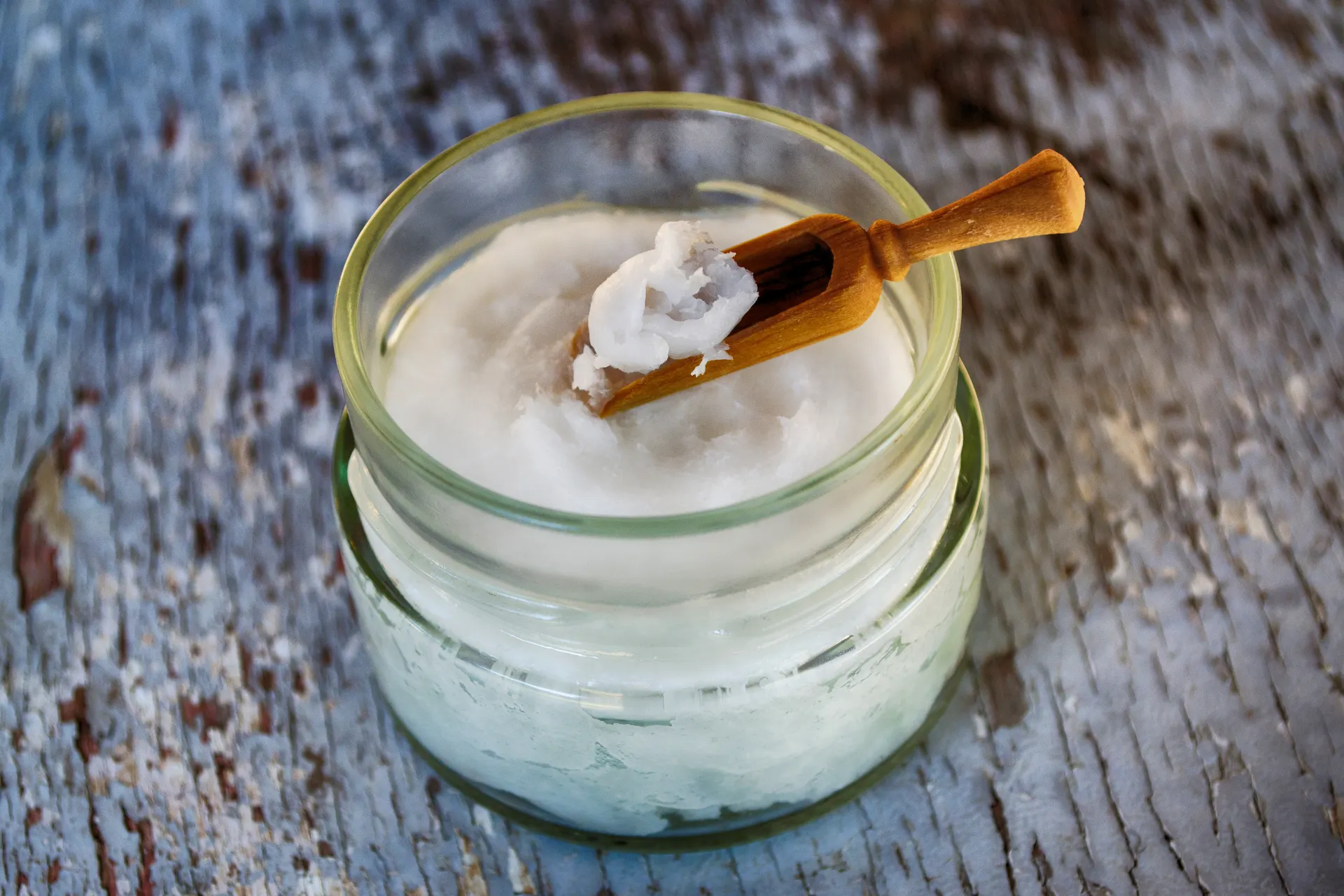
Photo via Pexels, creator Karola G (Pexels License).
Frequently Asked Questions
Which type of coconut oil is best for massage?
For most massage, fractionated coconut oil is the best coconut massage oil pick. It stays liquid, has no scent, and doesn’t need to be melted first. Choose whole virgin coconut oil if you mainly want it for dry skin or you like the melt-on feel, and you don’t mind a coconut scent.
Can I use coconut oil from the kitchen for massage?
Yes, if it’s plain virgin or refined coconut oil with nothing added. Food-grade virgin coconut oil is the same form tested in the skin trials above. It will be solid in a cool room, it smells of coconut, and it’s harder to wash out of fabric than fractionated oil.
Is MCT oil the same as fractionated coconut oil?
They overlap but aren’t always identical. Both are made mostly of medium-chain triglycerides, but “MCT oil” sold as a food supplement can be made from palm kernel oil as well as coconut. For massage, buy a product labeled for topical use with “Caprylic/Capric Triglyceride” or “fractionated coconut oil” on the ingredient list.
Does coconut massage oil stain sheets?
Any oil can leave marks on fabric if it isn’t washed out. Fractionated coconut oil is generally easier to wash out than whole coconut oil, which is one reason massage suppliers recommend it. Washing linens in warm water soon after use prevents most problems.
Will coconut massage oil clog my pores?
It can for some people, especially whole coconut oil on the back and chest. Most comedogenicity ratings trace back to an old rabbit-ear test rather than human trials, so treat them as a rough guide. Our coconut oil for massage guide covers this tradeoff in more detail.
The Bottom Line on the Best Coconut Massage Oil
The best coconut massage oil is mostly a question of form. For regular massage, a plain, unscented fractionated coconut oil is the practical default: NOW Solutions for home use, Bon Vital’ for a massage practice, Aura Cacia if certified organic matters to you, and Plant Therapy if you’re blending your own scented oil. If you want whole coconut oil for dry skin or the melt-on feel, a plain virgin coconut oil like Nutiva’s is the form the clinical trials actually tested.
Whichever you choose, check that the ingredient list has one line, skip added fragrance, and patch-test on acne-prone areas first. If coconut doesn’t suit your skin, our massage oil guide covers the other common options.
About the Author
Written and researched by the BodyOilGuide.com editorial team. Read our editorial standards for how we research, source, and fact-check skin-care content.
Sources
Evangelista, M.T.P., Abad-Casintahan, F., & Lopez-Villafuerte, L. “The Effect of Topical Virgin Coconut Oil on SCORAD Index, Transepidermal Water Loss, and Skin Capacitance in Mild to Moderate Pediatric Atopic Dermatitis: A Randomized, Double-Blind, Clinical Trial.” International Journal of Dermatology, 53(1), pp. 100-108, 2014. onlinelibrary.wiley.com/doi/10.1111/ijd.12339
Agero, A.L., & Verallo-Rowell, V.M. “A Randomized Double-Blind Controlled Trial Comparing Extra Virgin Coconut Oil With Mineral Oil as a Moisturizer for Mild to Moderate Xerosis.” Dermatitis, 15(3), pp. 109-116, 2004. pubmed.ncbi.nlm.nih.gov/15724344
Fulton, J.E., Pay, S.R., & Fulton, J.E. “Comedogenicity of current therapeutic products, cosmetics, and ingredients in the rabbit ear.” Journal of the American Academy of Dermatology, January 1984. The rabbit-ear assay behind most comedogenicity ratings still circulated online.
General food-science and cosmetic-chemistry references on coconut oil’s melting point (about 24°C/76°F) and the composition of fractionated coconut oil (caprylic/capric triglyceride).
Product names, ingredients, and sizes for the picks above were checked against each brand’s own product page (auracacia.com, planttherapy.com, bonvital.com, nutiva.com) or, for NOW Solutions, major retailer listings, at the time of writing. Prices are intentionally not stated as fixed figures, since they change often.