Dry, frizzy hair is not just a bad-hair-day problem. In YouGov’s 2025 survey of 1,236 US adults, frizz or damage affected 9% of respondents “to a great extent” and another 15% “to a moderate extent.” Using hair oil for moisturizing dry or frizzy strands is one of the most common fixes people reach for, but most people use it the wrong way: the wrong oil for their hair’s porosity, the wrong timing, or in some cases oil that just sits on top of hair that never absorbs it.
This guide explains how hair oil actually moisturizes strands versus how it simply seals them, how to read your hair’s porosity in about two minutes, which oils fit which hair type, and how often to apply oil without weighing hair down.
Key Takeaways
- Only a few oils, mainly coconut and avocado, have been shown to penetrate the hair shaft and reduce protein loss. Most oils, including mineral oil, stay on the surface and only seal in moisture that’s already there.
- Hair porosity, how easily your cuticle lets moisture in and out, matters more than curl pattern for choosing an oil: low-porosity hair usually needs lighter oils, high-porosity hair usually needs richer, more occlusive ones.
- Frequent washing raises scalp moisture loss: one study found a day-28 median transepidermal water loss (TEWL) of 20.87 g/m²/h with washing every 1 to 2 days, versus 17.67 g/m²/h washing every 3 to 5 days.
- Applying oil to damp, not soaking-wet or bone-dry, hair and focusing on mid-lengths to ends generally gives the best moisture retention.
- The idea that water “over-hydrates” and damages hair, often called hygral fatigue, is more contested among cosmetic chemists than most articles let on.
Why Hair Gets Dry in the First Place
Hair gets dry when it loses water and surface lipids faster than the scalp and cuticle can replace them, which is the gap hair oil for moisturizing is meant to close. Each strand is dead protein (keratin) wrapped in a cuticle layer that overlaps like roof shingles. An intact, flat cuticle holds moisture in the cortex underneath it. Heat styling, chemical processing, sun exposure, friction, and over-washing all roughen that cuticle, opening gaps between the shingles that let water escape faster than it can be replaced.
Washing habits play a bigger role in this than most people assume. A January 2024 study in the International Journal of Trichology tracked 60 participants over 28 days. Researchers measured transepidermal water loss, or TEWL, which is essentially how fast moisture evaporates from the scalp. People who washed every one to two days reached a median TEWL of 20.87 g/m²/h by day 28. People who washed every three to five days reached only 17.67 g/m²/h, a statistically significant difference (p<0.01). More frequent washing measurably strips more moisture, and that same drying effect extends down the hair shaft with every rinse and towel-dry cycle.
Frizz is a related but separate problem, and it comes down to porosity more than humidity alone. According to Marico Ltd.’s R&D team, higher-porosity hair absorbs and loses water faster than lower-porosity hair, and that rapid swelling and shrinking rearranges the hydrogen bonds that hold the hair’s shape, which is what shows up visually as frizz. This is where hair oil for moisturizing earns its keep, filling the gaps in the cuticle that would otherwise let water move in and out too quickly.
This isn’t a fringe complaint. The same YouGov survey found dry scalp or dandruff affects 8% “to a great extent” and 14% “to a moderate extent.” A 2026 Attest survey found repairing damage and breakage is a top concern for 32% of US consumers, behind only hair loss and thinning (37%) and scalp health (34.5%). By one market-research estimate, not an independently audited figure, dry and damaged hair is also the largest single revenue segment (roughly 28.44%) of the $88.2 billion global hair-and-scalp-care market (Grand View Research).
Despite that demand, hair oil remains a minority habit, and usage varies sharply by group.
How Hair Oil for Moisturizing Actually Works
Hair oil for moisturizing works in one of two ways: it either penetrates into the hair shaft, or it seals moisture onto the surface. Which one your oil does changes what you should realistically expect from it.
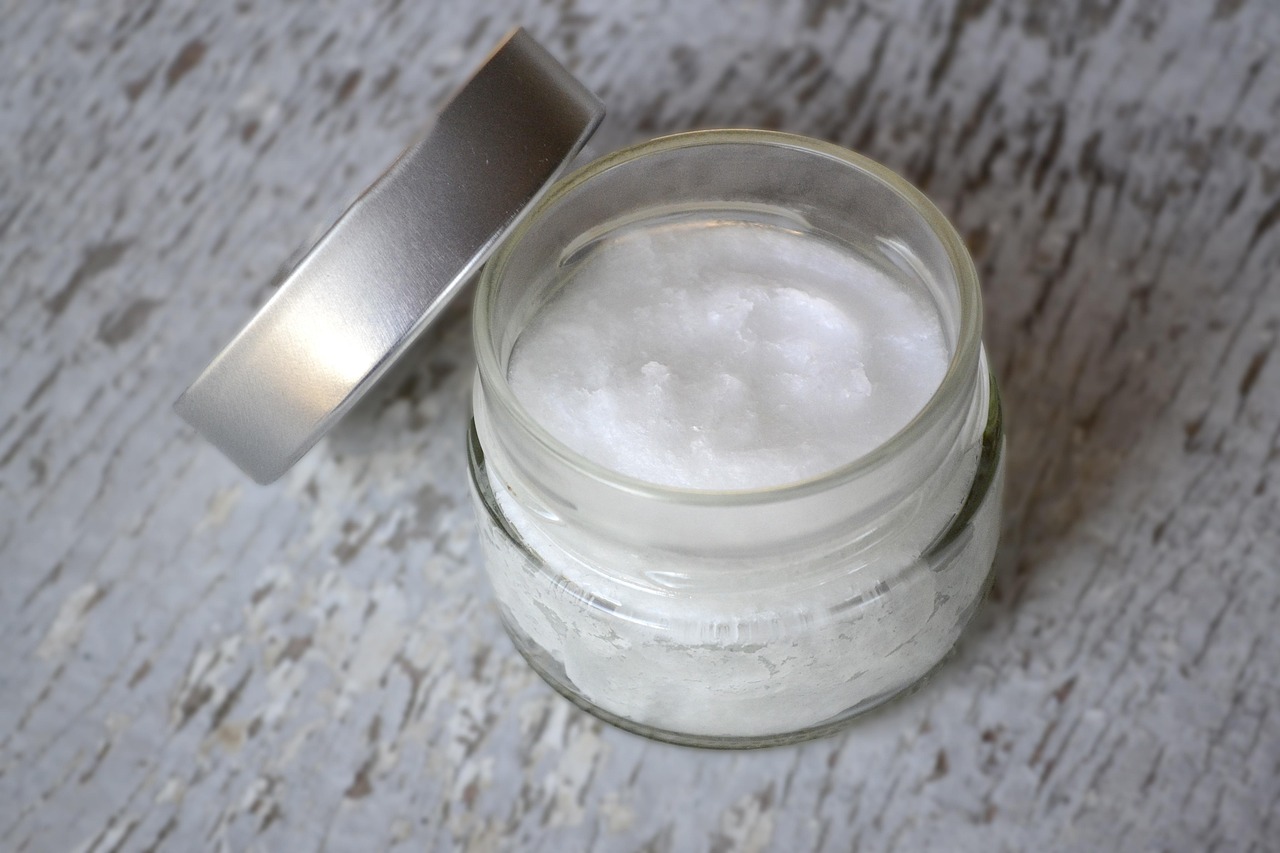
Coconut oil is the most studied penetrating oil. In a widely cited 2003 study from Marico Industries’ R&D team, researchers compared coconut, sunflower, and mineral oil applied before and after washing. Coconut oil was the only one of the three that measurably reduced protein loss from the hair shaft, in both damaged and undamaged hair. Sunflower and mineral oil showed no such effect and stayed on the surface instead. The specific reduction figures often quoted online, roughly 39% in damaged hair and 17% in undamaged hair, are widely cited secondary numbers rather than independently re-verified figures, so treat them as directional. The well-supported part is the qualitative finding: coconut oil gets into the strand, and the other two don’t.
A more recent study adds an important nuance, especially if argan oil is your go-to. Researchers publishing in Cosmetics (MDPI) in April 2024 tested how coconut, avocado, and argan oil penetrate Caucasian hair fibers in both virgin and chemically damaged (bleached) states. Coconut and avocado oil reinforced the hair’s natural hydrophobic barrier in virgin hair, working as expected. Argan oil behaved differently: its higher proportion of unsaturated fatty acids actually increased water absorption and reduced mechanical resistance, an effect more pronounced in bleached, damaged hair. That doesn’t make argan oil a bad choice; it’s still a good pick for shine and slip. It just means “penetrating” doesn’t automatically translate to “protective” in every hair condition.
Know Your Hair Porosity First
Your hair’s porosity, not just whether it’s curly, straight, thick, or fine, is the biggest factor in choosing hair oil for moisturizing that actually works for you. Porosity describes how open or tight your cuticle layer is, which controls how fast water and oil move in and out of each strand.
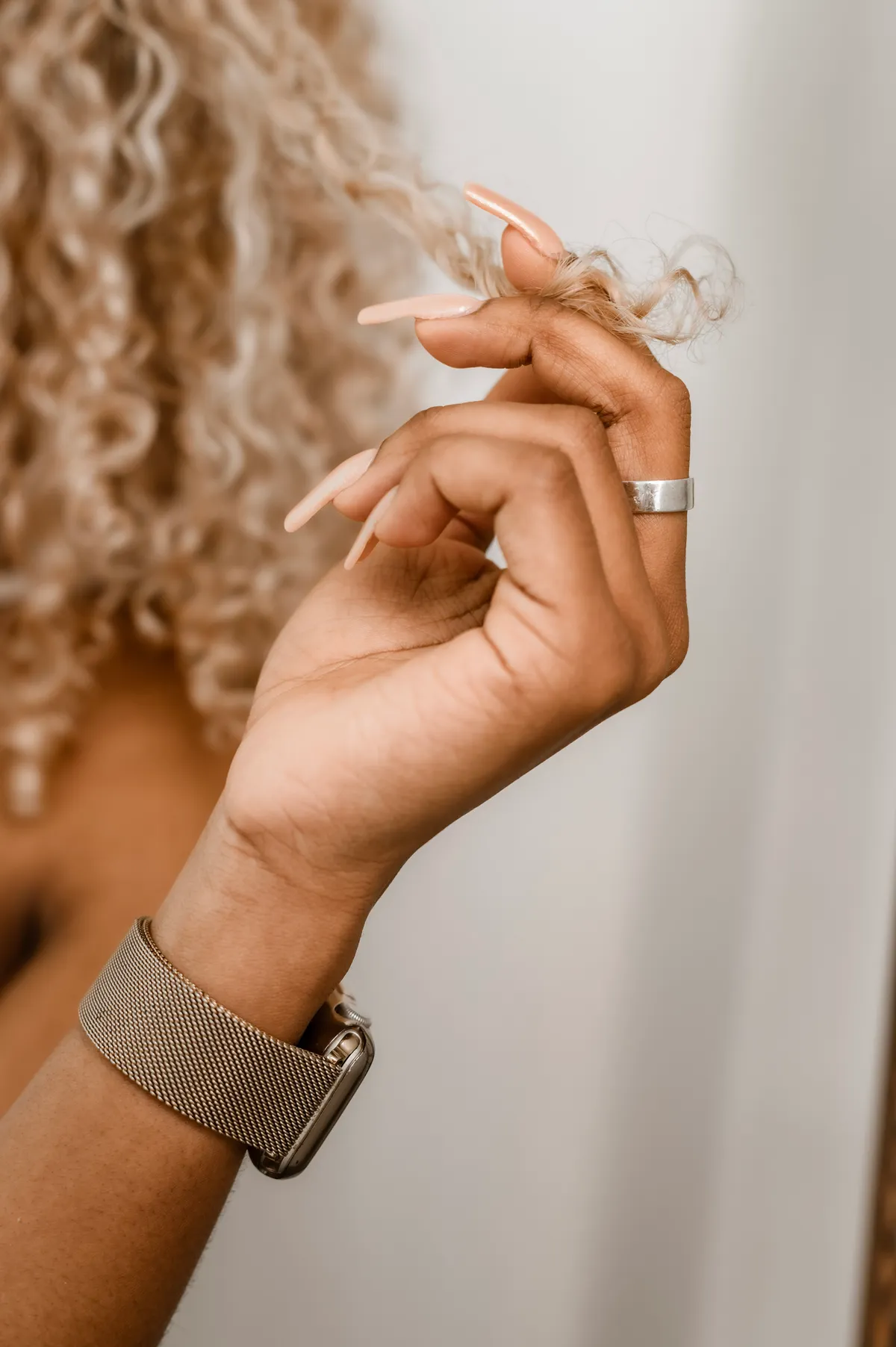
Low porosity hair has a tightly overlapping cuticle. Moisture struggles to get in, but once it’s there, it also struggles to escape. This hair type often looks dull or coated when heavy oils sit on top without absorbing. Light oils, such as jojoba or argan, tend to work better here. Applying oil to damp rather than dry hair also helps it get past the tighter cuticle.
Medium porosity hair has a cuticle that lies fairly flat but with enough lift to let moisture move in and out at a reasonable rate. This is generally the easiest porosity to work with, and it tolerates a wider range of oils.
High porosity hair has a raised, gapped, or damaged cuticle, often from coloring, heat styling, or chemical treatments. It’s exactly the pattern behind the frizz mechanism described earlier: water moves in and out fast, driving the swelling and hydrogen-bond shifts that show up as frizz. Heavier, more occlusive oils, such as coconut or avocado, tend to help most here because they slow down that in-and-out moisture exchange, which is exactly the job hair oil for moisturizing needs to do on high-porosity strands.
A simple way to get a rough read on your porosity: drop a clean, freshly washed strand of hair into a glass of room-temperature water. Hair that floats for a few minutes typically points to low porosity. Hair that sinks slowly points to medium porosity. Hair that sinks quickly usually points to high porosity. It isn’t a lab-grade diagnostic, but it’s a useful starting point before buying an oil.
The Best Oils for Moisturizing Different Hair Types
Choosing hair oil for moisturizing well depends on your porosity and how dry or damaged your hair currently is, not on whichever oil has the best marketing.
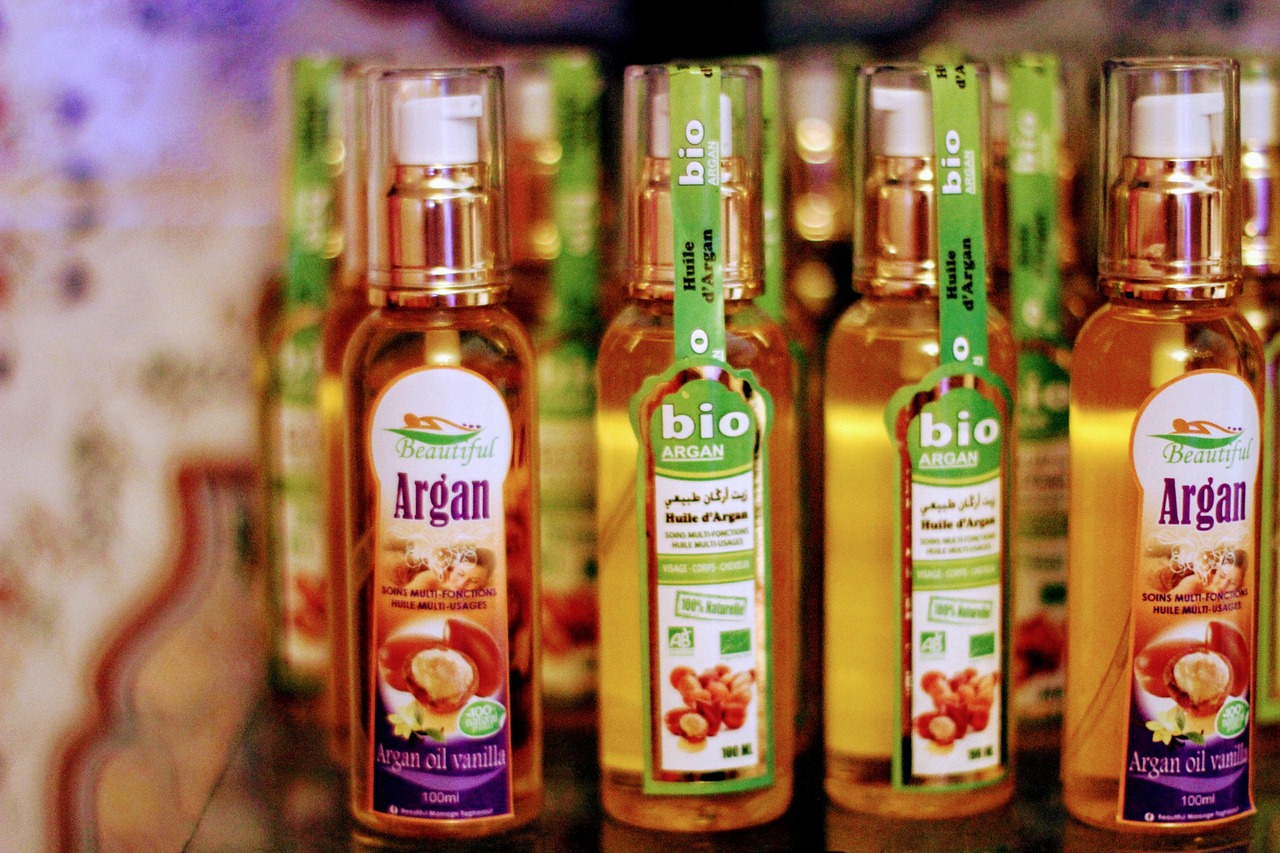
Coconut oil is the strongest evidence-backed hair oil for moisturizing damaged or high-porosity hair, since it reduces protein loss and also works well as a pre-wash treatment. It’s dense, though, so fine or low-porosity hair can end up looking greasy if it’s overused.
Avocado oil suits thick, coarse, or high-porosity hair that needs a heavier, richer oil. Research shows it reinforces the hair’s protective barrier in virgin, non-chemically-treated hair.
Argan oil works well as a lightweight finishing oil for shine, softness, and frizz control, particularly on low-to-medium porosity or fine hair. Use it with more caution on bleached, colored, or otherwise chemically damaged hair: its fatty-acid profile increases water absorption in that specific hair state, which can leave already-fragile strands more vulnerable rather than better protected.
Jojoba oil is technically a liquid wax, closest in structure to natural sebum, and it’s a solid pick for fine or low-porosity hair and for the scalp, since it absorbs easily without the heavy feel of coconut or avocado oil.
If you’re not sure where to start, matching porosity to weight is the simplest rule: lighter oils for low porosity, richer oils for high porosity, and either one, applied sparingly, for medium porosity.
| Oil | Penetrates the shaft? | Best porosity match | Caution |
|---|---|---|---|
| Coconut | Yes | Medium to high | Can look greasy on fine or low-porosity hair if overused |
| Avocado | Yes (virgin hair) | High | Heavier; less studied on chemically damaged hair |
| Argan | Partial (increases water uptake on damaged hair) | Low to medium | Use cautiously on bleached or chemically damaged hair |
| Jojoba | No (seals/coats) | Low | Closest to natural sebum; good for scalp use |
| Sunflower | No (seals/coats) | Any, as a light sealant | No measured protein-loss reduction |
| Mineral oil | No (seals/coats) | Any, as a light sealant | No measured protein-loss reduction |
How to Apply Hair Oil for Maximum Moisture
Timing changes what hair oil for moisturizing actually does for your hair. Applied to damp hair as a leave-in, oil helps seal in water that’s already there and smooths the cuticle. Applied to dry hair before you shampoo, it acts more like a protective pre-treatment that can reduce how much water and protein you lose during the wash itself.

Pre-wash (pre-poo) treatment. Apply hair oil for moisturizing generously to dry or slightly damp hair, focus on mid-lengths and ends, and leave it in for 20 minutes to a few hours, or overnight, before shampooing. This is where coconut oil’s protein-loss protection matters most, since it’s coating the strand before the wash cycle that normally strips moisture.
Leave-in after washing. On damp, towel-dried hair, work a small amount of hair oil for moisturizing, a dime-sized amount for shoulder-length hair, between your palms and smooth it from mid-lengths to ends. Avoid the roots unless your scalp runs dry, since oil there on an already-oily scalp looks greasy fast.
Finishing product on dry hair. A drop or two of a light oil, such as argan or jojoba, rubbed into dry palms and smoothed over the surface can tame flyaways and add shine without a full moisture treatment.
The basic technique, regardless of timing:
- Start with less oil than you think you need.
- Warm it between your palms so it distributes evenly instead of landing in one concentrated spot.
- Apply from the ends upward toward, not into, the scalp, since ends are the oldest and most porous part of the hair.
- Check the result after a few hours or the next day, and adjust the amount before your next application.
How Often Should You Oil Your Hair?
There’s no universal number, but frequency should roughly track how much moisture your hair loses, which comes down to your porosity, your styling habits, and how often you wash.
As a starting point, low porosity or fine hair usually does best with hair oil for moisturizing once or twice a week as a leave-in. It’s slower to absorb and can look weighed down with more frequent use. Medium porosity hair generally tolerates two to three applications a week. High porosity or chemically damaged hair often needs oil after every wash, plus an occasional pre-wash treatment, because that cuticle loses moisture fastest.
Wash frequency itself feeds into this. The scalp TEWL research cited earlier found that washing every one to two days raised median moisture loss to 20.87 g/m²/h, compared with 17.67 g/m²/h when washing every three to five days. The chart below shows that gap.
If you wash frequently, your scalp and hair lose moisture faster between washes, which is one reason people who shower daily often need to oil more consistently than people who wash two or three times a week.
Signs you’re overdoing it: hair looks flat or greasy within a day, or product builds up and won’t rinse clean. Signs you’re underdoing it: ends still feel dry after applying hair oil for moisturizing, or frizz returns within hours. Adjust in small steps, a week up or down, rather than overhauling your routine at once.
Common Mistakes That Cancel Out the Moisture Benefits
The most common mistake is treating hair oil for moisturizing as a replacement for conditioner instead of an addition to it. The American Academy of Dermatology recommends conditioner after every wash, along with using the right conditioner, oil, or scalp moisturizer for your specific hair type, not one instead of the other. Conditioner and oil do different jobs: conditioner smooths the cuticle and adds slip right after washing, and oil seals or reinforces afterward.
Applying too much hair oil for moisturizing, especially on already-clean, low-porosity hair, is the second most common issue. More product doesn’t mean more moisture. Past a certain point, extra oil just sits on the surface, attracts dust and product buildup, and makes hair look greasy rather than hydrated.
Skipping the palm-warming step is a smaller but real mistake. Oil applied straight from the bottle in one concentrated spot lands unevenly, so some sections get soaked while others get nothing.
Ignoring buildup is another one. If oil, dry shampoo, and styling products stack up over days without a proper clarifying wash, new oil applications sit on top of that layer instead of reaching the hair itself, so the moisturizing effect drops off even when you’re using a good oil correctly otherwise.
Is “Hygral Fatigue” Real? A Popular Myth, Reconsidered
Most hair-care articles repeat “hygral fatigue” as settled science. Among cosmetic chemists, the concept is more contested than that framing suggests. Hygral fatigue is the idea that repeatedly soaking hair in water and letting it dry causes cumulative swelling-and-shrinking damage that weakens the cuticle over time. It gets cited constantly as a reason to avoid over-wetting hair or to limit water-based products. The theory is plausible in principle, wet hair does swell, and that swelling is measurable, but the leap from “hair swells when wet” to “this is a major, common cause of everyday hair damage” gets repeated far more often than it’s actually tested.
Michelle Wong, a cosmetic chemist with a PhD who writes as Lab Muffin Beauty Science, has pushed back on how confidently this claim is usually stated. In a January 2026 breakdown of the hydration research, she argues that the popular framing overstates what the evidence actually shows. She references a roughly 50-person sensory panel in which hair with lower water content was rated as more moisturized and smoother than hair with higher water content, the opposite of what a simple “more swelling equals more damage” story would predict. That’s informed science communication built on a review of the available research, not a standalone peer-reviewed study, so it’s worth reading as a reasoned challenge rather than a final answer.
The practical takeaway isn’t “water is safe, ignore everything.” It’s that daily washing or wetting your hair isn’t automatically damaging it through some silent fatigue mechanism, and the more likely culprits behind dry or breaking hair, mechanical stress from rough detangling while wet, heat styling, chemical processing, and simple under-moisturizing, deserve more of your attention than water exposure itself.
Frequently Asked Questions
Can hair oil replace conditioner?
No. The American Academy of Dermatology recommends conditioner after every wash in addition to using hair oil for moisturizing your specific hair type, not oil instead of conditioner. Conditioner detangles and smooths the cuticle right after washing; oil then seals or reinforces on top of that.
Should I oil my hair before or after washing?
Both approaches work well for hair oil for moisturizing. Oiling before washing, known as a pre-wash or pre-poo treatment, can reduce protein loss during the wash itself, particularly with coconut oil. Oiling after washing, on damp hair, works more as a leave-in that seals in the moisture you just added. Choose based on how dry or damaged your hair currently is: very dry or high-porosity hair often benefits from both.
Can hair oil make hair greasy or weigh it down?
Yes, if you use too much or use a heavy oil on low-porosity or fine hair. Start with a small amount, focus on mid-lengths to ends rather than the scalp, and adjust based on how your hair looks the next day.
Is coconut oil good for all hair types?
It’s one of the best-studied oils for reducing protein loss, but its density makes it heavier than most fine or low-porosity hair needs. It tends to work best on medium-to-high porosity, thicker, or more damaged hair, or as an occasional pre-wash treatment for any hair type.
How long should I leave oil in my hair?
For a leave-in application on damp hair, no rinse-out time is needed; it just stays in. For a pre-wash treatment, 20 minutes to a few hours is typically enough for a penetrating oil like coconut oil to do its work. Overnight is fine too, but it isn’t required for the moisture benefit.
Does hair oil work on chemically damaged or bleached hair?
Hair oil for moisturizing can help here, but choose carefully. Coconut and avocado oil reinforce the hair’s protective barrier, while argan oil’s higher unsaturated fat content can increase water uptake and reduce mechanical resistance specifically in bleached or damaged hair, the opposite of what you want on already-fragile strands.
The Bottom Line on Hair Oil for Moisturizing
Hair oil for moisturizing helps most when it’s matched to what your hair actually needs: a penetrating oil like coconut for damaged or high-porosity strands, a lighter oil like jojoba or argan for fine or low-porosity hair, and a timing and frequency that fits your wash routine rather than a generic daily habit. The research is consistent on two points: not all oils do the same job (coconut and avocado get into the hair shaft, while sunflower and mineral oil mostly sit on top), and porosity, not just curl pattern or thickness, is what determines which approach actually works.
Start by checking your porosity, pick one hair oil for moisturizing that matches it, and apply it consistently for two to three weeks before judging results. If frizz, dryness, or damage stays stubborn despite a solid routine, it’s worth ruling out an underlying scalp or skin issue rather than continuing to swap products.
Patch-test any new hair oil for moisturizing on a small area of skin before full use, since nut- and plant-derived oils (coconut, avocado, argan) can trigger reactions in people with related sensitivities.
About the Author
This article was written and fact-checked by the Body Oil Guide editorial team. Read our editorial policy for how we research, source, and fact-check haircare content.
Sources
- Rele, A.S. & Mohile, R.B. “Effect of Mineral Oil, Sunflower Oil, and Coconut Oil on Prevention of Hair Damage.” Journal of Cosmetic Science, 54(2), pp. 175-192, March/April 2003 (Marico Industries R&D). library.scconline.org/v054n02/175. The commonly cited ~39%/~17% protein-loss-reduction figures are widely repeated secondary citations of this study and are not independently re-verified here; the qualitative finding is well supported.
- Lourenço, Gasparin, et al. “Impact of Hair Damage on the Penetration Profile of Coconut, Avocado, and Argan Oils into Caucasian Hair Fibers.” Cosmetics (MDPI), 11(2), Article 64, April 21, 2024. mdpi.com/2079-9284/11/2/64
- Mughni, Widaty, Nilasari, & Krisanti. Research on hair-washing frequency and scalp transepidermal water loss (TEWL). International Journal of Trichology, 16(1), pp. 16-24, January 2024, n=60. pmc.ncbi.nlm.nih.gov/articles/PMC12039775
- YouGov. “US Hair Care Trends 2025.” August 20, 2025, n=1,236 US adults. yougov.com
- YouGov. “US Hair Care Trends 2025” (hair-oil usage by demographic). August 20, 2025. yougov.com
- Grand View Research. “Hair And Scalp Care Market Size & Share Report, 2026-2033.” grandviewresearch.com. Cited here as a market-analysis estimate rather than an independently verified figure.
- Chavan, Pawar, & Gode (Marico Ltd. R&D). “Frizz Factors Revealed.” Cosmetics & Toiletries, September 3, 2025. cosmeticsandtoiletries.com
- American Academy of Dermatology. “Tips for Healthy Hair.” Updated August 12, 2024. aad.org
- Attest (Stephanie Rand). “Split Ends and Shifting Trends: State of Haircare in 2025.” May 2, 2026. askattest.com
- Wong, Michelle (Lab Muffin Beauty Science). “Hair Hydration and Water: The Real Science.” January 28, 2026. labmuffin.com